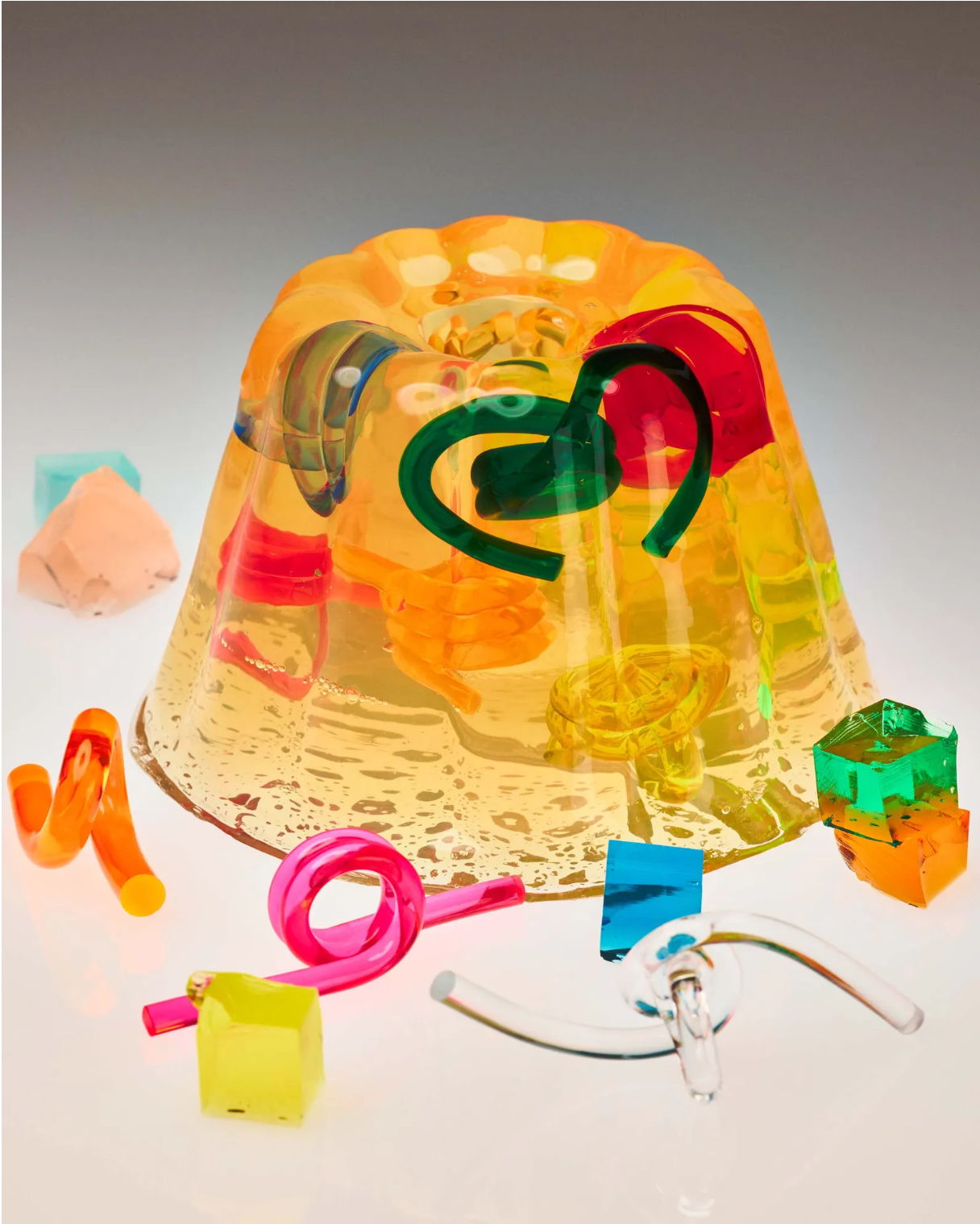
It’s a sweltering August afternoon in New York City—the kind of heat that even spotted lanternflies can’t be bothered to flutter through. Inside a photo studio, however, five people are circling around a wobbling dome of orange jello like it’s a couture gown on a model.
The gelatin, crafted by artist Chofa, isn’t just dessert—it’s sculpture. Suspended inside are several acrylic rings, painstakingly layered into the mold over hours to achieve a spatial harmony worthy of an art gallery. Around the dome sit jewel-toned jello cubes: neon yellow, radioactive green, and an impossible-to-ignore electric blue.
Photographer David Brandon Geeting peers through his lens, then at the monitor, brow furrowed. “It’s too desaturated,” he announces. His team nods in agreement. Cubes are swapped, rearranged, pushed forward. “Pink and yellow can come slightly forward,” he instructs, like a designer tweaking a runway lineup. Finally, someone pokes the dome hard enough to send it shimmying.
Click. The screen lights up with a kaleidoscopic image—an MRI of Candy Land itself. The photographer smiles. “The jello has no bad angles,” the stylist quips.
Which, of course, raises the obvious question: What does jello have to do with Vogue? The answer is—more than you’d expect.
A Sweet Beginning
The magazine’s relationship with gelatin goes back to 1910, when Vogue (a mere teenager at the time) published a recipe in Spring Luncheon for Little Girl’s Birthday: a citrus-infused jello whipped with egg white until it resembled snow, served with cream. This was before digital photography, before easy flights to Paris Fashion Week—editorial options were limited, and yes, sometimes dessert recipes filled the pages.
Wartime Wiggles
During World War II, Vogue’s merchandising editor received a letter from her husband, stationed in New Guinea. His military dinner? “Meat, a thin soup, a vegetable, and a wonderful dessert of Jello with ‘reduced cream’ over it.” Once again, limited story options. But gelatin made the cut.
High Fashion Meets High Wiggle
Fast-forward to 2011, when photographer Tim Walker crowned models in kaleidoscopic Christopher Kane tops with wobbly jello hats. By then, the world was our creative oyster—and still, we chose gelatin.
A Cultural Legacy in Gelatin
But the history goes deeper. Peter Cooper patented edible gelatin in 1845, alongside running a glue factory and collecting enough Manhattan real estate to bankroll Cooper Union, the tuition-free art school. Thanks to his endowment, generations of artists—including photographers who shaped Vogue—owe their careers in part to jello. And let’s not forget the infamous Vogue holiday party where an editor brought a spiked jello cake. The next day’s office-wide hangover became an oddly unifying team-building experience.
The Jiggle’s Last Stand
Now, the future of gelatin looks a little paler. With the Department of Health and Human Services set to phase out artificial food dyes by 2026, the saturated wobble of neon jello may soon be muted. The jiggle will remain—but less vivid, less flamboyant.
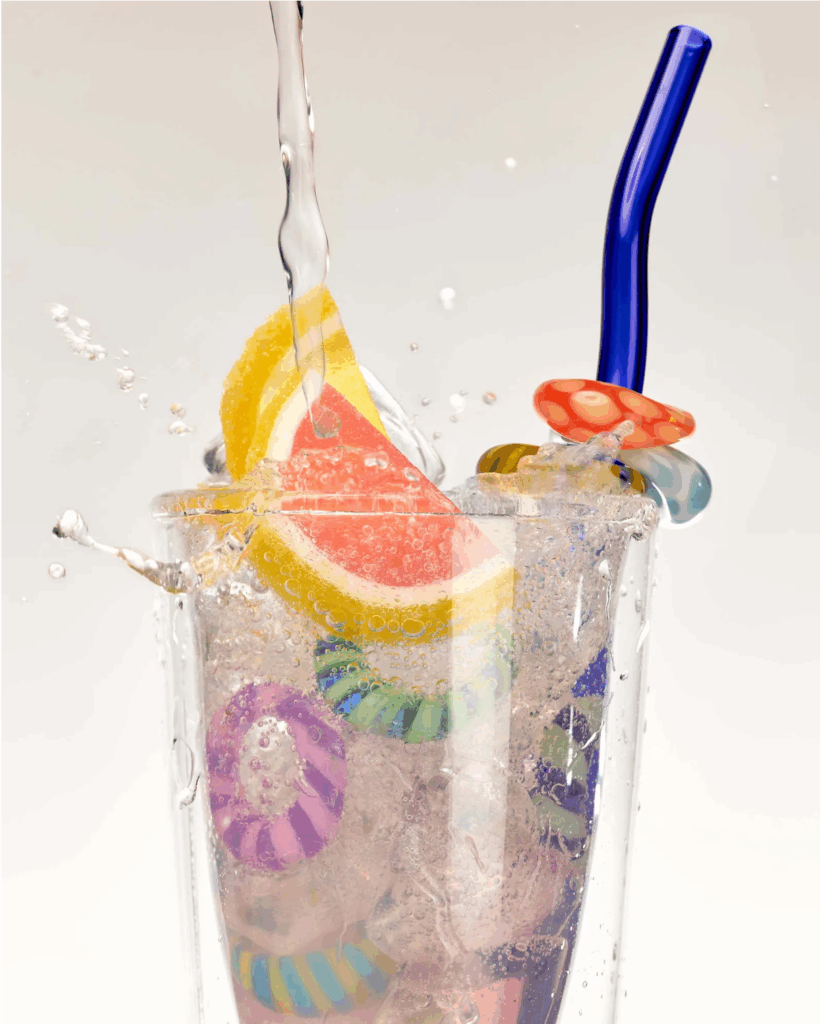
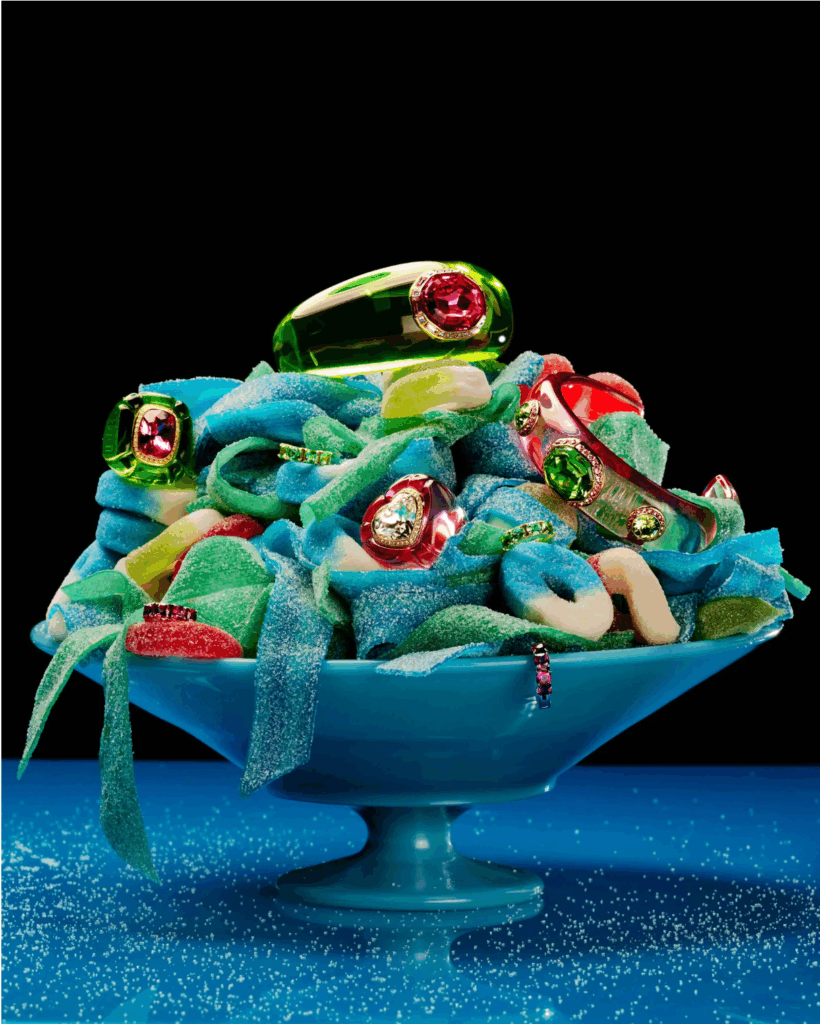
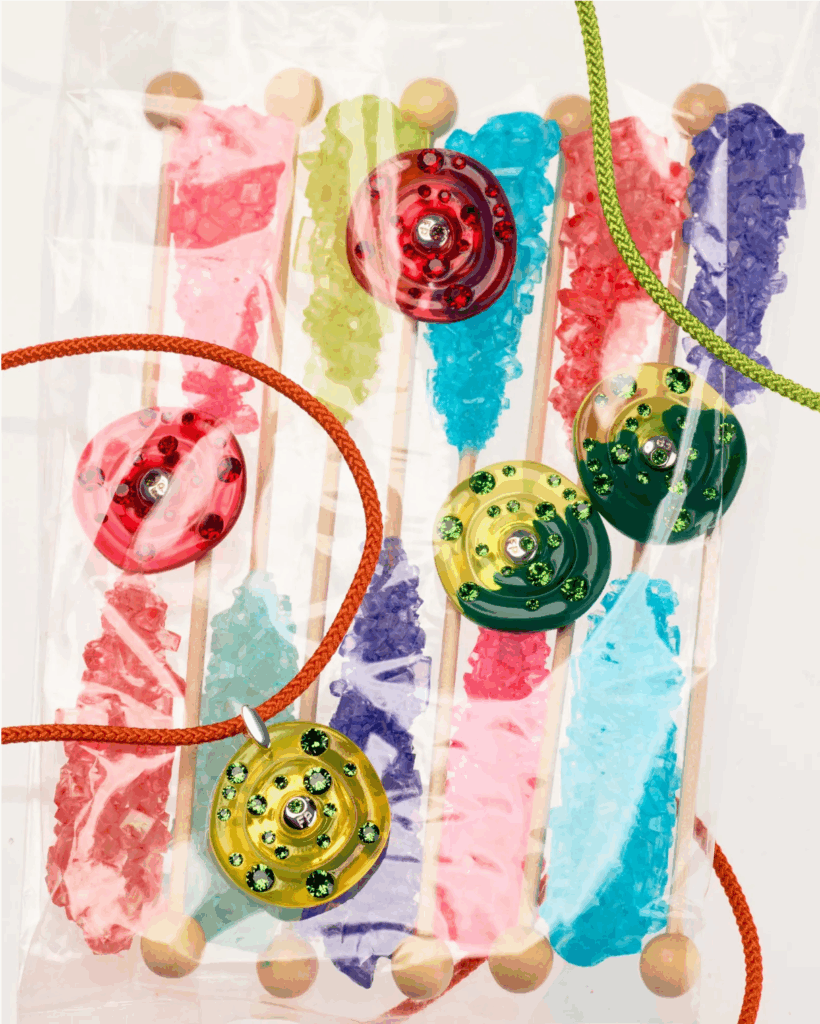
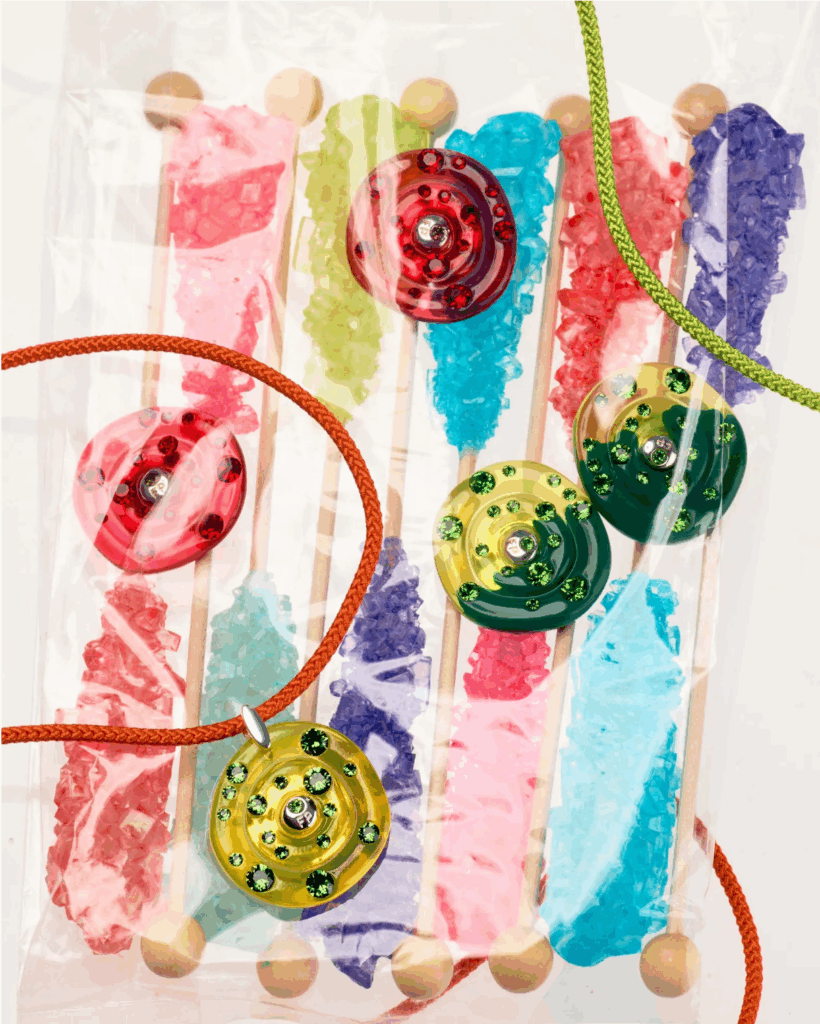
So, in honor of all the sticky, wobbly years together, Vogue staged one last, glorious send-off: a full-blown jello editorial, styled with candy-colored sidekicks—blue raspberry ribbons, rock crystal candy, even a frosted cake sourced from a Key Foods in Brooklyn. To accessorize? Candy-inspired jewelry from Swarovski, Fry Powers, and Susan Alexandra, sparkling like crystallized sugar.