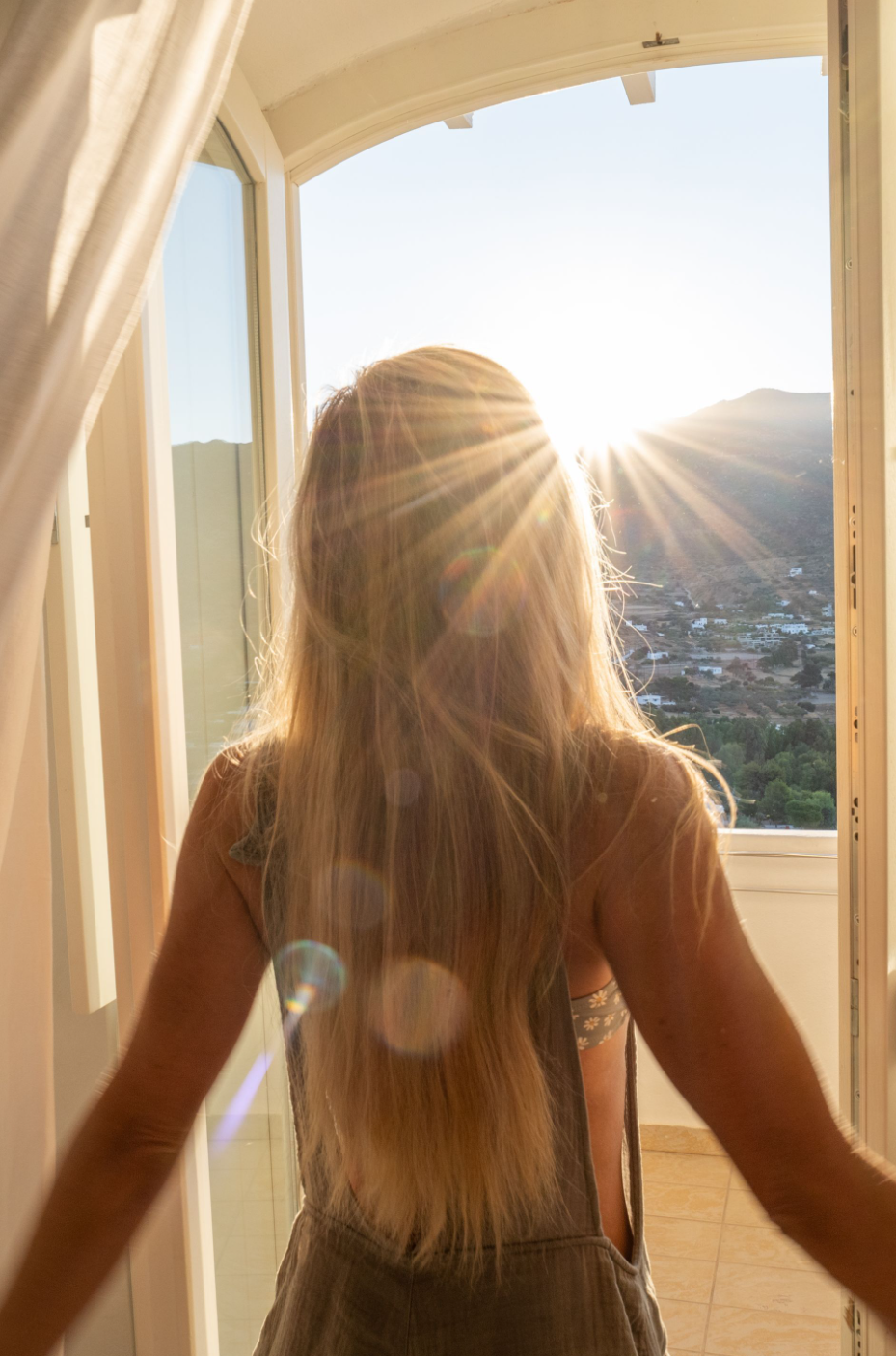
I’m one of those people who, no matter the weather—rain, snow, or freezing temperatures—starts the morning by opening the windows. For me, it’s more than just a habit; it feels like a small but powerful ritual, a way of breathing life into the start of the day. Not everyone in my family understands this routine, but as Anabel Vázquez, co-founder of Laconicum, once told me: “Fresh air is energy. Even if it’s cold outside, I love opening the windows the moment I wake up.”
That said, a recent conversation with a microbiologist friend made me stop and think. While he didn’t tell me to give up the ritual altogether, he did add a caveat: “Opening windows doesn’t sterilize your home. In fact, it introduces outdoor bacteria indoors.” His words left me questioning something I had always taken for granted.

Why Ventilation Still Matters—Even in Winter
Despite that warning, the benefits of airing out your home remain clear. María Dolores Cima Cabal, PhD in Biology and director of the Master’s in Environmental and Energy Management at La Rioja International University (UNIR), explains:
“When you open a window, yes, dust, pollen, or even microorganisms can enter. But ventilation reduces the buildup of carbon dioxide, odors, and other compounds that accumulate indoors. It also prevents excessive microbial growth in closed, damp spaces.”
Virologist Estanislao Nistal, professor of microbiology at Universidad San Pablo, agrees. According to him, ventilation helps to lower humidity, prevent mold, and reduce harmful particles in the air. As for the microorganisms that drift in from outdoors? “Most of them are harmless,” he says. “They’re part of the natural ecosystem.”
In other words, ventilation isn’t about creating a sterile bubble. It’s about balance—keeping indoor air fresh, clean, and breathable.
The Right Way to Air Out Your Home in Cold Weather
Still, anyone who’s stood shivering in front of an open window in January knows that winter ventilation can feel like a test of willpower. The good news? You don’t need much time. Both experts recommend just 10 to 20 minutes a day to refresh indoor air without losing too much heat.
When should you do it? Early morning is ideal, or at times when outdoor air quality is at its best. And if possible, create cross-ventilation by opening windows on opposite sides of the home—this accelerates air exchange and makes the process more effective.
Clearing Up a Common Myth
One thing ventilation doesn’t do is “kill germs.” As my microbiologist friend reminded me, fresh air isn’t a disinfectant. But that doesn’t make the practice useless. By reducing the buildup of pathogens indoors, it lowers the chance of virus transmission.
As Nistal puts it: “Absolute sterility doesn’t exist, nor is it desirable. Our immune systems need to interact with the natural world. The point of ventilation isn’t to sterilize—it’s simply to keep air fresh.”
What If You Live Alone?
Even if you don’t share your living space, experts say ventilation is still important. Everyday activities—cooking, showering, using cleaning products—release moisture and airborne pollutants. Left unchecked, these can accumulate in a closed space.
So while the health benefit of reducing infection risk is more obvious in households with multiple people, there’s no reason to skip ventilation when you’re on your own. Think of it as creating a healthier, more open environment for yourself.
Alternatives When Opening Windows Isn’t an Option
Of course, not every home makes ventilation easy. Some rooms have sealed windows, others face heavy pollution or noise. In these cases, technology can help.
Cima Cabal points to devices like dehumidifiers, air purifiers, HEPA filters, or even UV-based air disinfection systems as effective alternatives to a daily open-window routine. They won’t necessarily replace the psychological lift of crisp morning air, but they can keep your indoor environment fresh and safe.
Bottom Line
Ventilation isn’t a magic bullet for cleanliness, nor is it about living in a sterile bubble. But just a few minutes of fresh air each day—especially in winter—can dramatically improve your home’s atmosphere, keeping it lighter, healthier, and more pleasant to live in.
So yes, even when the thermometer dips below zero, it’s worth opening that window. After all, sometimes the simplest rituals are the ones that make us feel most alive.